
An ink art course is like a creative trip from the very fundamentals all the way to create strong, striking pieces. Consider it as negotiating a twisting road: each early stride shapes the later leaps you will take. Beginning slowly, the course introduces you to many kinds of ink including bright alcohol inks, classic water-based inks, and the dramatic lines of India ink. Along with this, you will familiarize yourself with the trade’s tools: exquisite brushes, glossy Yupo paper, odd droppers, and even some home items that shockingly become indispensable in your creative process.
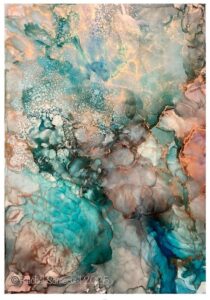
These first classes are meant to help you in and boost your confidence. Exercises may center on learning control—how to load the brush with exactly the perfect amount of ink, what happens when you flick your wrist or pull the brush gently, and how a single drop might change after it strikes the surface? The first-time wonderful experience of seeing the inks bleed and mix shapes the tone for what is to follow.
The training introduces layering methods as you become comfortable. All of which start to feel natural after some work, you will learn to make transparent washes, mix overlapping hues, and blend delicate gradients. Your teacher might show you how to lift highlights to give your artwork depth and mystery or how to create dramatic halos on the paper by adding alcohol to half-dried ink. Once thought of as inadvertent mistakes, these fast becoming thrilling, repeatable approaches give your paintings vitality.
Next is texture experimentation, which lets you get artistic with masking fluid, salt, or even blowing ink through a straw. These lighthearted techniques enable scenes full of motion, energy, and surprise as well as organic, erratic forms. Every project tests your imagination and pushes your abilities—from a dynamic scene to a burst of flowers to an abstract work suggesting galaxies.
Moving to more advanced levels, composition and intention take front stage. With a mix of colors and values, you will learn to lead the observer’s eye. To anchor your flowing ink drawings, add line work using calligraphic strokes or subdued contours. Every fresh session helps you to develop your own artistic voice and learn how to produce harmony and movement.
Group initiatives and helpful criticism advance you along the road. Observing how others handle similar tasks helps you to see fresh ideas and techniques you might never have attempted by yourself. The community component keeps you interested and motivated by demonstrating that development is continuous and that shared innovation results.
By the end of the course, you will have developed a strong set of techniques—layering, blending, lifting, and playing with mixed media—that combine as a real creative language. Originally conducted as ink experiments, what began as artistic decisions will now seem as such. You will end with a portfolio of frame-worthy artwork and, maybe most significantly, the drive and confidence to keep personally exploring. And as a last reminder of your path, your fingertips may show a tenacious ink stain—a little but significant mark of creative success.